




Authored by
Dr. Nikhil Taxak, Ph. D, APAC Head, Pricing and Market Access Data and Analytics, Access Infinity.
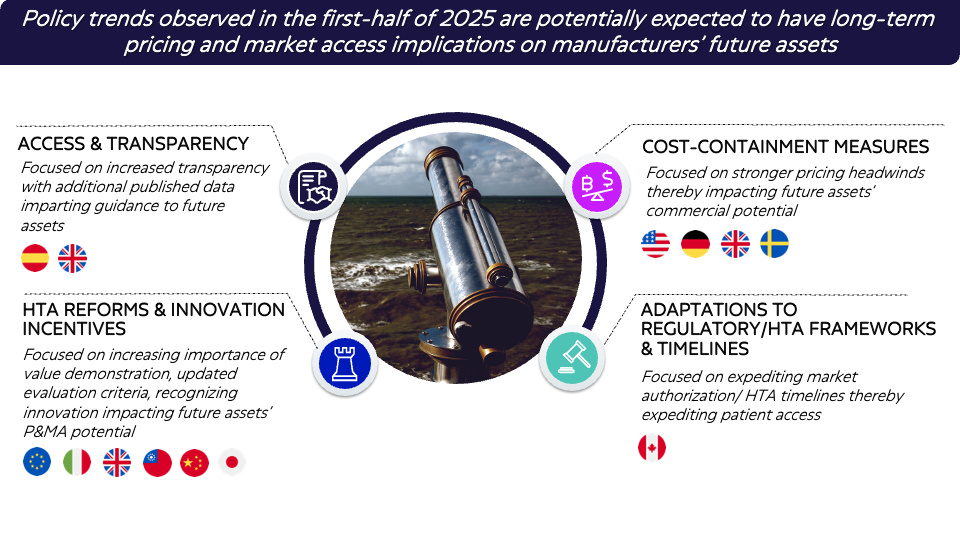
The first half of 2025 has underscored a decisive shift in global market access and pricing as evident from the payers doubling down on cost-containment levers, tightening HTA frameworks, and tying pricing to industrial and supply resilience goals. For pharma, the year is shaping up as a balancing act, navigating downward price pressure while adapting evidence strategies to meet evolving payer demands. Looking ahead, the second half of 2025 and beyond will test pharmaceutical manufacturers’ ability to be more agile, evidence-led, and globally coordinated as policies converge on value, sustainability, and equitable access.
2025 so far has not been business as usual. It is the year payers reset evidence standards and tie pricing and market access to commercial strategy. The winners? Teams that move early, evidence-first, locally aligned and who quickly adapt to these dynamically evolving global payer policies.
Click here to learn about Access Infinity’s Digital + Consulting Suite of Solutions
About the author
Nikhil leads the Data and Analytics team with more than 12 years of experience in global pricing and market access (P&MA). He has extensive P&MA experience in both consulting and pharma industry (including Novartis Oncology) across therapy areas and global markets. He is responsible for driving strategy and roadmap for Access Hub, NURO and evidence Hub while ensuring data quality, accuracy, and depth.
Don’t let your access and pricing strategy fall behind! Click to subscribe and unlock details and expert commentary on each key policy shift from 2025’s ever-evolving payer landscape.
Contact Nikhil at nikhil@accessinfinity.com

Access Infinity closely analysed the updates on the EU Pharma package, a sweeping legislative reform designed to reshape pharmaceutical regulation, access, and incentives across Member States.

On June 4, 2025, after nearly two years of legislative debate, the Council of the European Union adopted its position on the EU Pharma Package, the most ambitious overhaul of EU pharmaceutical legislation in over 20 years. Comprising a Directive and a Regulation, the Package aims to update the outdated framework (Directive 2001/83/EC, Regulation 726/2004) and unify orphan and paediatric medicine laws under one roof.

As part of the broader pharmaceutical reform, the Council, Parliament, and Commission proposed differing approaches to regulatory data protection and market exclusivity. While technical elements like transferable vouchers and transition timelines were addressed, Member States also voiced diverging views. Countries with major pharmaceutical industries such as Germany, France, Italy, Denmark, and Sweden opposed modulated data protection tied to fulfilling public health conditions, citing concerns over innovation incentives. In contrast, Malta, Estonia, Cyprus, Portugal, and the Czech Republic raised issues around equitable access. Malta voted against the Council’s position, criticising insufficient access obligations and the extension of data protection.
While there are clear disagreements on some key topics, there is also acknowledgement of shared goals across institutions. The pharmaceutical industry continues to emphasize the importance of finding a balanced approach between improving access to medicines, fostering innovation, and maintaining competitiveness.
Now, with trilogue negotiations officially launched on 17 June 2025, the EU institutions are working to align on the final text. While the first trilogue was largely procedural, progress will pick up in September under Denmark’s presidency, as the window to finalise the reform by the end of 2025 narrows.
If trilogue agreements solidify in early 2026, rollout may begin by 2027–2029, depending on the transition timelines.
The EU Pharma Package is no longer theoretical. Trilogues have begun. Global regulatory, market access and pricing professionals should proactively evaluate how new obligations and incentives will impact launch planning, exclusivity strategies, and regulatory engagement at both EU and Member State levels.
Key Next Steps for Pharma Stakeholders
Click here to learn about Access Infinity’s Digital + Consulting Suite of Solutions
Authored by
Nikhil Taxak, Ph. D, APAC Head, Pricing and Market Access Data and Analytics*
Sapana Gusain, Associate Analyst, Data Team
David McConkey, Partner
Brett Gardiner, Senior Partner
All authors represent Access Infinity
*Corresponding author: nikhil@accessinfinity.com

Access Infinity closely analysed the U.S. MFN policy from the perspective of global pricing and market access implications for pharmaceutical manufacturers, focusing on how they can strategise to seize opportunities and address challenges.

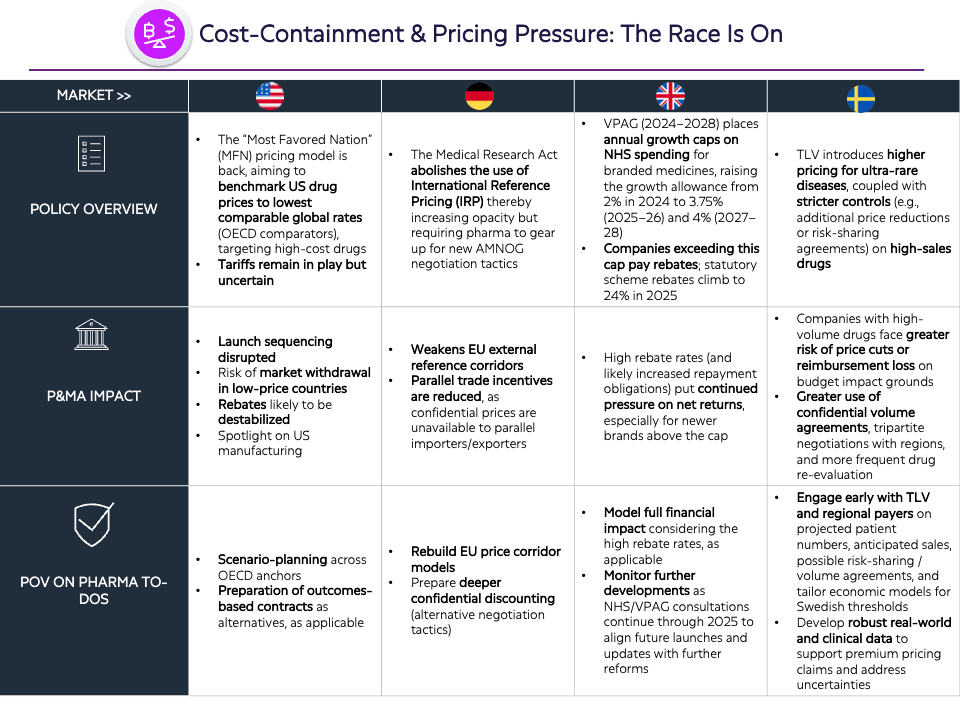
U.S. President Donald Trump has signed an executive order to implement Most Favored Nation (MFN) drug pricing, aiming to align U.S. drug costs with the lowest prices paid by developed nations. The policy, which applies to Medicare, Medicaid, and the private sector, intends to leverage U.S. trade power to force pharmaceutical companies and comparator nations to voluntarily adopt a global pricing structure. However, the pharmaceutical industry has strongly opposed MFN pricing, citing risks to research investment, market stability, and international pricing strategies. When a similar proposal was introduced in late 2020, it faced legal challenges and was ultimately blocked in court.

Pharmaceutical companies need to adopt an agile and proactive strategy to mitigate risks and capitalise on opportunities arising from the U.S. MFN drug pricing policy. Here’s a structured approach:
1. Strategic Market Adaptation
2. Competitive & Regulatory Engagement
3. R&D & Portfolio Diversification
4. Pricing & Commercial Model Evolution
5. Crisis & Scenario Planning
Click here to learn about Access Infinity’s Digital + Consulting Suite of Solutions
Authored by
Nikhil Taxak, Ph. D, APAC Head, Pricing and Market Access Data and Analytics*
Samrudhi Mansukh, Analyst, Data Team
David McConkey, Partner
Brett Gardiner, Senior Partner
All authors represent Access Infinity
*Corresponding author: nikhil@accessinfinity.com

The global regulatory and payer policy landscape is evolving rapidly, introducing new regulations and strategic shifts that will significantly influence pricing and market access (P&MA) strategies for the pharmaceutical manufacturers. These transformations will impact market entry approaches, reimbursement frameworks, and portfolio optimisation, creating both challenges and opportunities for them.
Global early access stakeholders must prioritise proactive planning, agile adaptation, and cross-functional collaboration. Early identification of market access opportunities, close monitoring of policy changes, and the ability to quickly adjust pricing and access strategies will be critical for navigating both risks and opportunities in 2025 and beyond.
Ultimately, those who can anticipate and respond to payer policy evolution-leveraging up-to-date policy insights such as that provided by Access Infinity team and fostering strong internal and external partnerships-will be best positioned to ensure optimal patient access and commercial success in the shifting global landscape.
Access Infinity closely analysed two key payer policies from the perspective of P&MA implications for pharmaceutical manufacturers, focusing on how they can strategise to seize opportunities and address challenges.
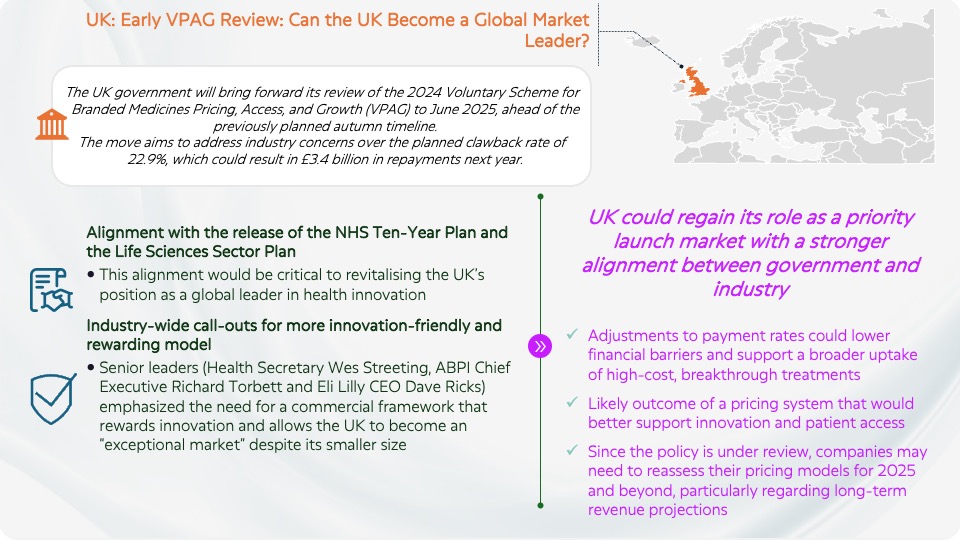
The UK government is bringing forward its review of the 2024 Voluntary Scheme for Branded Medicines Pricing, Access, and Growth (VPAG) to June 2025, ahead of the previously planned autumn timeline. This will align with the release of the NHS Ten-Year Plan and the Life Sciences Sector Plan, both seen as critical to revitalising the UK’s position as a global leader in health innovation.
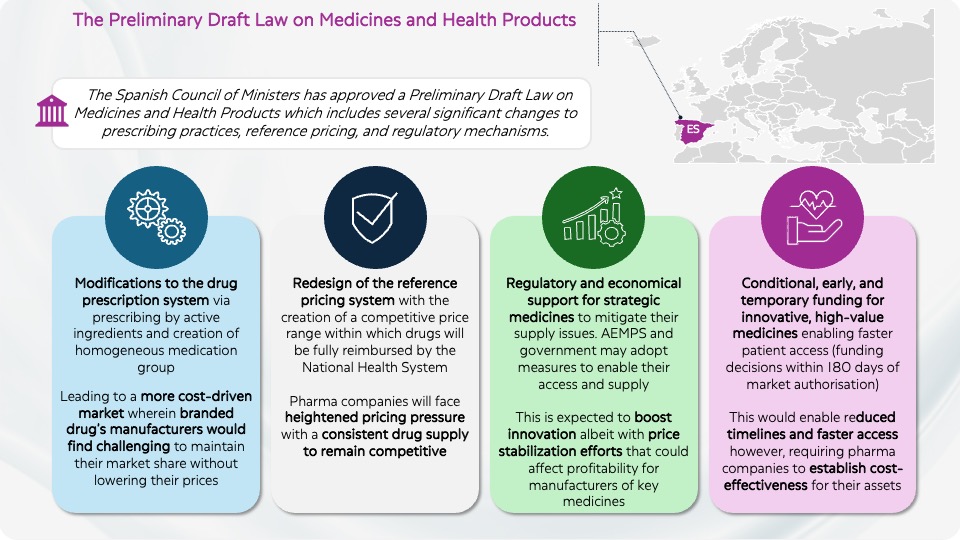
The Spanish Council of Ministers has approved a Preliminary Draft Law on Medicines and Health Products focusing on accelerating access to innovative treatments, ensuring the sustainability of the healthcare system, and strengthening strategic autonomy.
The pharmaceutical industry is facing a rapidly evolving global payer policy environment, characterised by intensifying cost-containment measures, shifting evidence requirements, and complex pricing/HTA frameworks. These changes demand a fundamental shift in market access and pricing strategies—moving from reactive responses to a model of proactive planning and agile adaptation.
Proactive Planning: A Necessity for Market Success
To navigate these complexities, pharmaceutical manufacturers must anticipate policy shifts, assess their impact, and develop forward-looking strategies that align with the payer expectations. A robust proactive approach enables pharma companies to optimise pricing models, ensure reimbursement success, and strengthen their value proposition within HTA frameworks. Establishing early engagement with payers, refining value communication, and integrating real-world evidence into decision-making will be critical for long-term sustainability.
Agility: The Key to Adapting to Market Uncertainty
The dynamic payer landscape requires manufacturers to embrace flexible and adaptive strategies. As pricing and market access regulations tighten and competition intensifies, the ability to swiftly adjust reimbursement strategies, address emerging access hurdles, and refine commercial models will separate market leaders from those struggling to maintain access. Companies must embed cross-functional collaboration and responsive decision-making into their market access frameworks to ensure resilience in uncertain conditions.
Navigating 2025 and Beyond: A Strategic Imperative
With 2025 shaping up as a pivotal year, pharma global and local market access and pricing teams must closely monitor policy developments, anticipate upcoming regulatory/ HTA/ pricing shifts, and position themselves ahead of potential challenges. By embracing proactive planning and agile adaptation, pharmaceutical manufacturers can thrive in an evolving payer environment, securing competitive advantages while meeting the needs of both healthcare systems and patients.
Click here to learn about Access Infinity’s Digital + Consulting Suite of Solutions
Authored by
Nikhil Taxak, Ph. D, APAC Head, Pricing and Market Access Data and Analytics*
Anupama Somu, Associate Manager, Data Team
Mahesh Jaju, Associate Manager, Data Team
David McConkey, Partner
Brett Gardiner, Senior Partner
All authors represent Access Infinity
*Corresponding author: nikhil@accessinfinity.com


The global payer environment is continuously undergoing transformative changes, driven by new policy introductions and significant updates to the existing frameworks. These shifts are poised to reshape pricing and market access (P&MA) strategies for pharmaceutical companies, influencing both the launch of new products and the optimisation of their existing and planned portfolios.
The Access Infinity team explores how these evolving dynamic payer policies will impact pharmaceutical manufacturers and patient access to innovative therapies across global markets in 2025 and beyond. This year represents a pivotal moment for the industry, presenting both opportunities and challenges. For pharmaceutical companies, it is essential to closely monitor policy developments, adapt to shifting dynamics, and embrace forward-thinking strategies to thrive in this rapidly evolving landscape.
Access Infinity closely analysed three key payer policies from the perspective of P&MA implications for pharmaceutical manufacturers, focusing on how they can strategise to seize opportunities and address challenges.
The latest publication of the French Social Security Financing Law (LFSS 2025), underlines continued emphasis on the cost containment measures and increasing pricing pressure for pharmaceutical manufacturers in France.

NICE has announced significant updates to the Highly Specialised Technologies (HST) appraisal process by refining the criteria for assessing treatments for ultra-rare diseases. The amended criteria will be implemented from 1st April 2025 to ensure that the decisions for treatments routed through this process are more predictable, consistent and transparent.

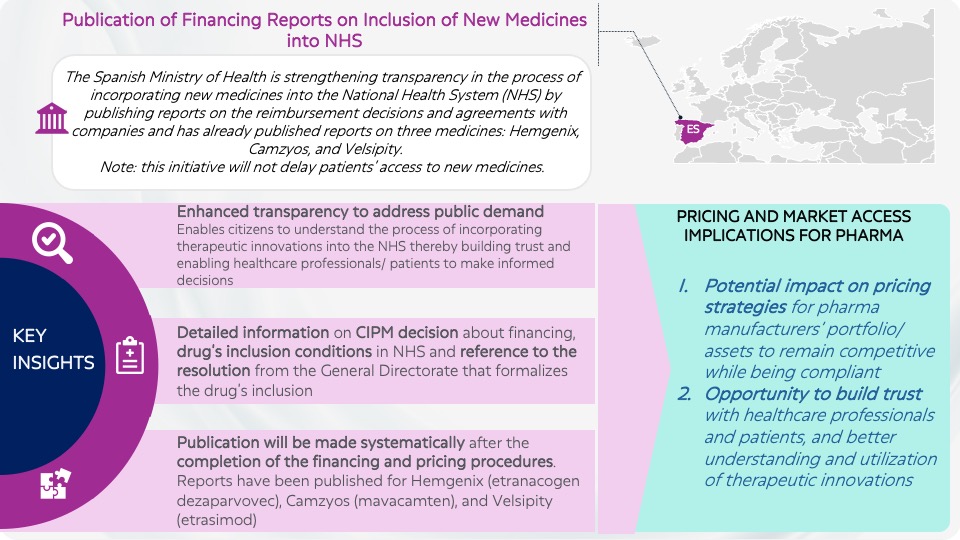
The Spanish Ministry of Health is strengthening transparency in the process of incorporating new medicines into the National Health System (NHS) by publishing reports on the reimbursement decisions and agreements with companies
The pharmaceutical industry is navigating an era of unprecedented change, shaped by evolving global payer policies, intricate pricing regulations, and dynamic market conditions across the globe. These shifts are creating a complex and challenging environment for pharma’s market access and pricing strategies. To succeed, pharmaceutical industry must abandon reactive approaches and embrace a new paradigm: proactive planning paired with agile adaptation.
Why Proactive Planning is Critical
Pharmaceutical manufacturers must anticipate market-specific payer policies, understand their implications, and identify opportunities while mitigating risks. Proactive planning enables manufacturers to align their strategies with evidence expectations, payer preferences, and HTA frameworks, ensuring smoother access to markets with optimised pricing outcomes.
Agility: The Key to Navigate the Unexpected
The global payer landscape is constantly evolving, with new regulations emerging, evidence requirements becoming more stringent and intensifying competitive landscape. In this context, agility becomes a necessity. Pharmaceutical manufacturers that can adapt quickly to shifting policies and leverage flexible strategies will be better equipped to navigate these challenges effectively.
As the pharmaceutical industry stands at the crossroads of opportunities and challenges in 2025, success will depend on how well companies can anticipate payer policy changes/ updates, adapt strategies, and collaborate via cross-functional approach. By embracing proactive planning and agile adaptation, pharmaceutical manufacturers can thrive in this dynamic environment while ensuring patient access to life-saving therapies at sustainable prices.
Click here to learn about Access Infinity’s Digital + Consulting Suite of Solutions
Authored by
Nikhil Taxak, Ph. D, APAC Head, Pricing and Market Access Data and Analytics*
Anupama Somu, Associate Manager, Data Team
Sapana Gusain, Associate Analyst, Data Team
David McConkey, Partner
Brett Gardiner, Senior Partner
All authors represent Access Infinity
*Corresponding author: nikhil@accessinfinity.com

The global payer landscape is experiencing seismic shifts steered by a few policy transformations and advent of new policies. This evolving payer landscape is expected to potentially impact pricing and market access (P&MA) strategies of pharmaceutical companies, for their new launches or optimisation of existing portfolios, owing to stricter evidence expectations, growing emphasis on demonstrating real-world evidence of a product’s value to the healthcare system and patients and adaptations to Health Technology Assessments (HTAs) and regulatory frameworks.
Access Infinity team considers how these dynamically evolving payer policies will affect pharmaceutical manufacturers and patients’ access to innovative therapies across global markets in 2025 and beyond. This year certainly is at crossroads between opportunities and challenges for the pharmaceutical industry, hence it becomes crucial for the manufacturers to monitor, adapt the policy dynamics and adopt forward-thinking strategies to thrive and effectively navigate in this evolving environment.
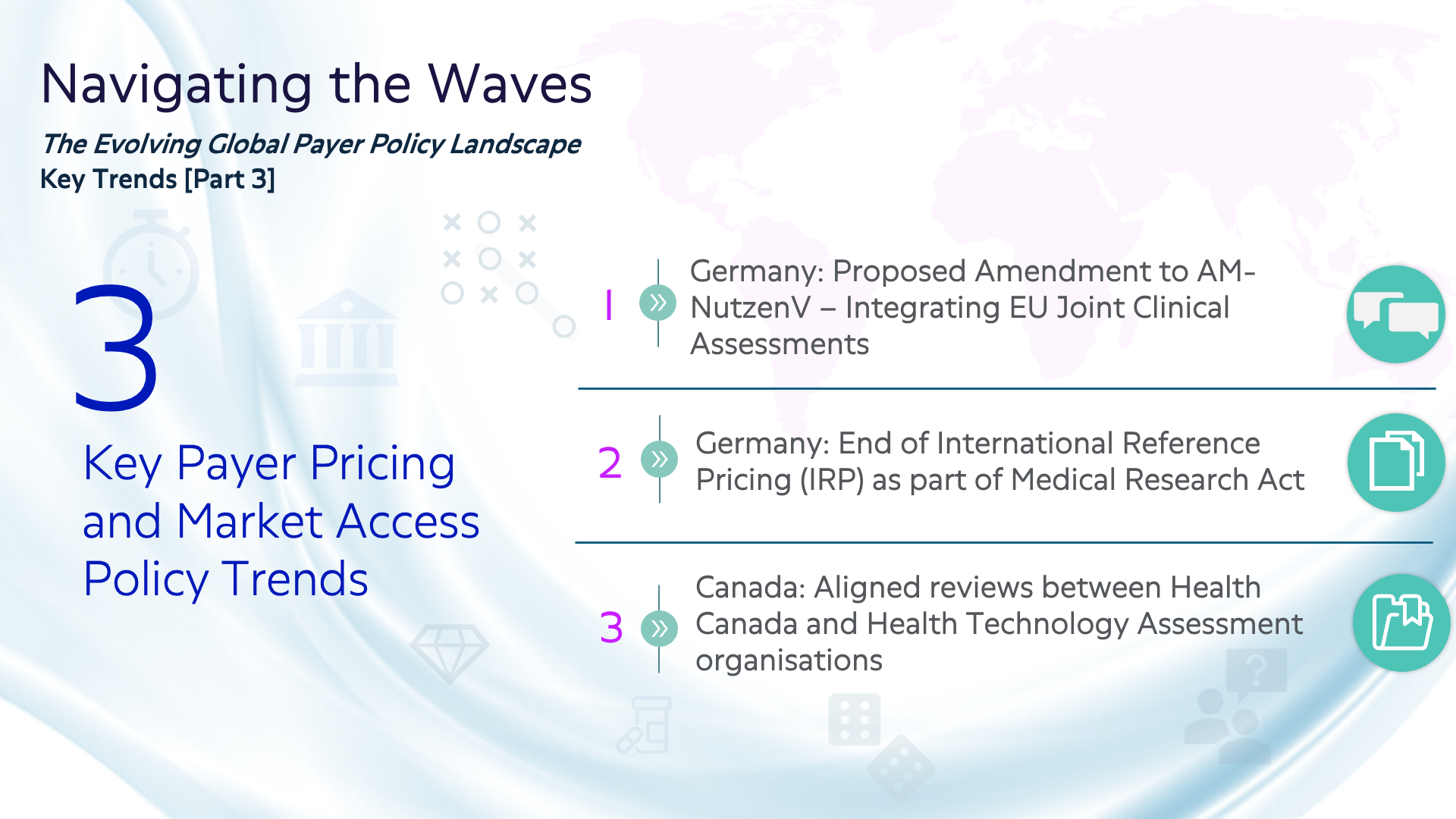
Access Infinity closely analysed three key payer policies from the perspective of P&MA implications for pharmaceutical manufacturers, focusing on how they can strategize to seize opportunities and address challenges.
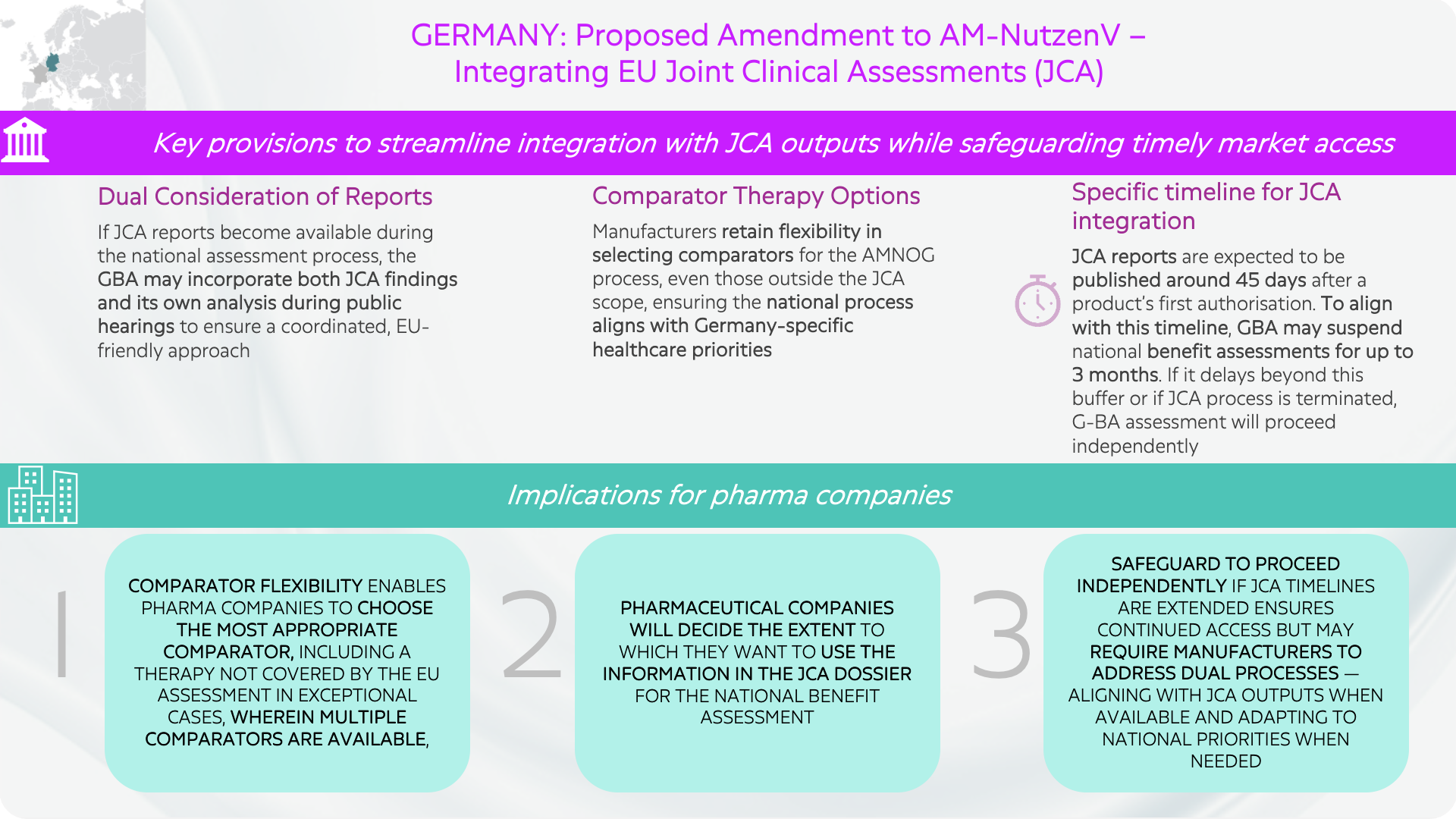
The German Federal Ministry of Health has introduced a draft amendment to the Pharmaceutical Benefit Assessment Regulation (AM-NutzenV), aligning Germany’s national benefit assessment framework with the new EU Joint Clinical Assessment (JCA) process under the EU HTA Regulation, effective January 2025. The proposed changes aim to harmonise timelines and processes while maintaining Germany’s high standards for evaluating therapeutic and economic value.
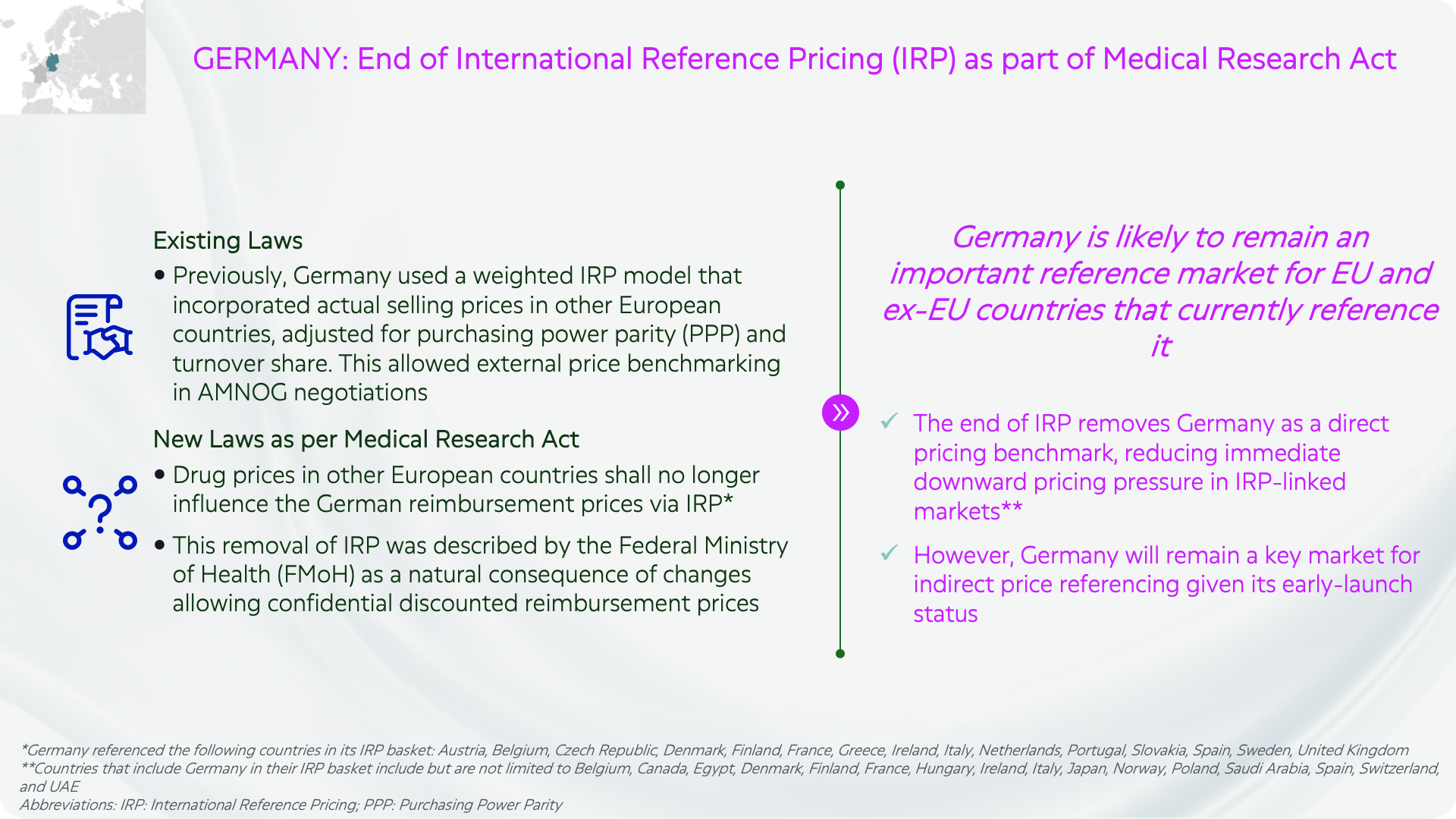
Germany has officially eliminated International Reference Pricing (IRP) as a factor in drug pricing under the Medical Research Act. Previously, Germany used a weighted IRP model that incorporated actual selling prices in other European countries, adjusted for purchasing power parity (PPP) and turnover share. This allowed external price benchmarking in AMNOG negotiations.
The removal of IRP means Germany’s role as a pricing anchor in Europe and globally will shift, impacting countries that reference German prices (e.g., Canada, Japan, South Korea). However, Germany will likely remain a key market for indirect price referencing given its early-launch status.
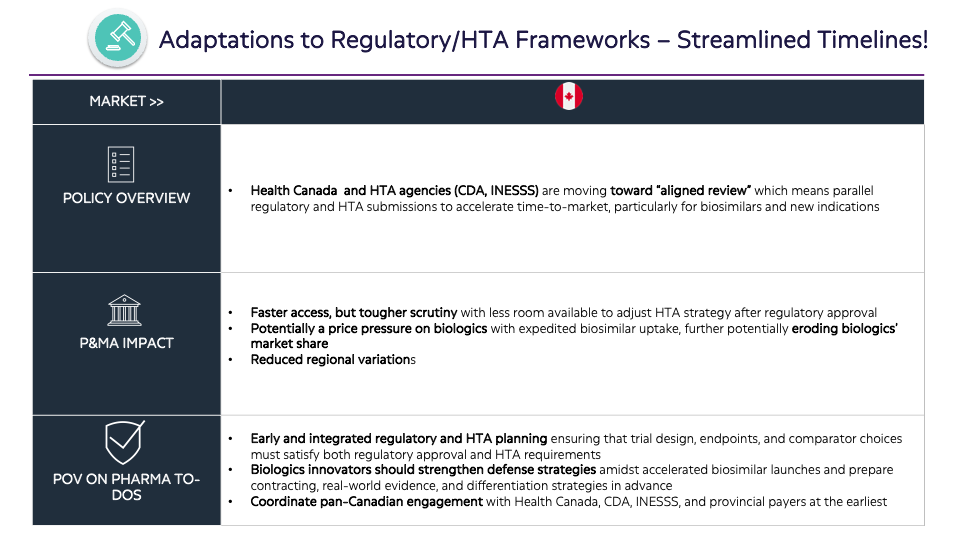
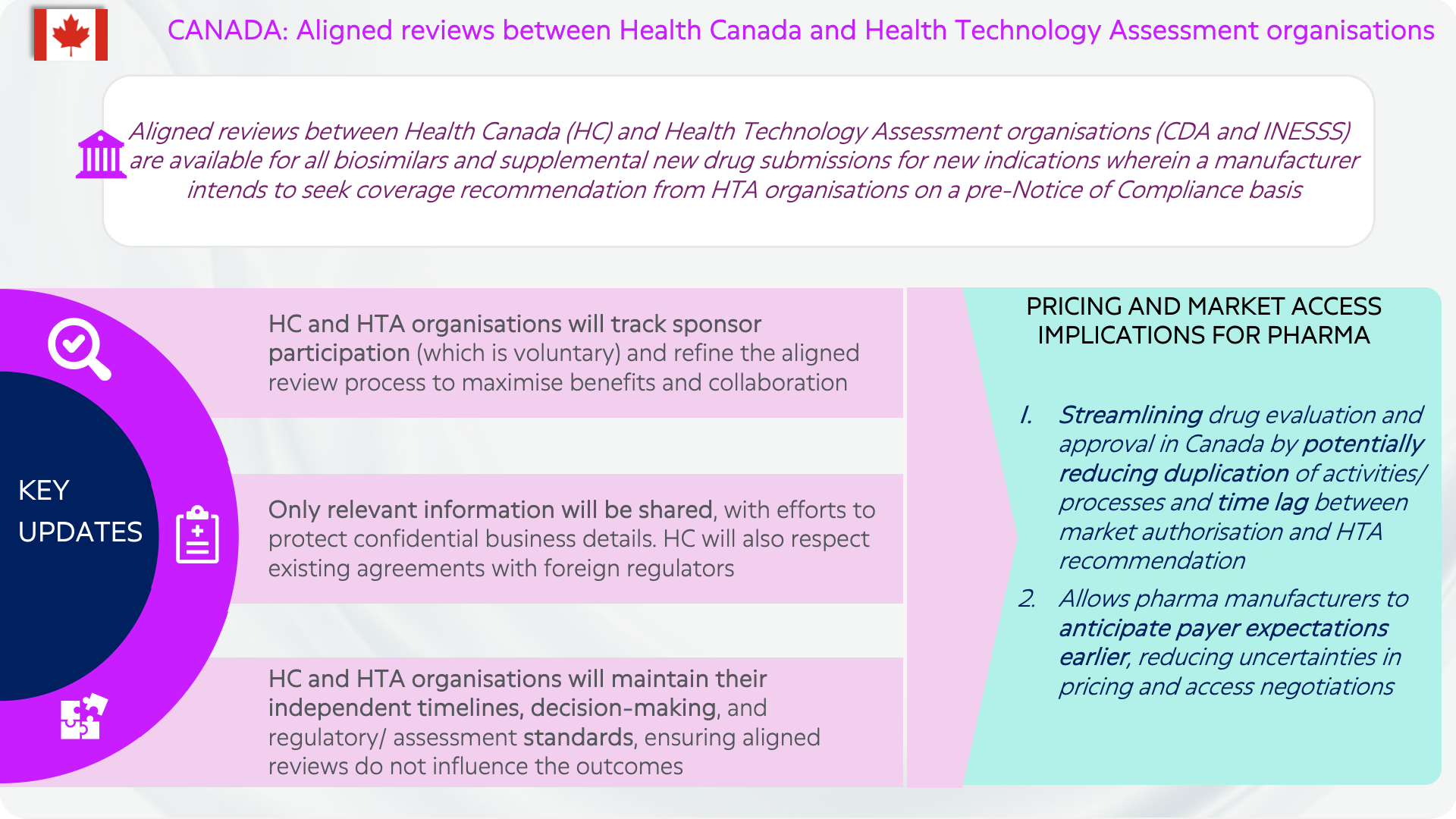
Health Canada (HC) released a notice, effective immediately, to the industry regarding aligned reviews between Health Canada and health technology assessment organisations (CDA and INESSS). To ensure the shortest possible interval between regulatory approval and HTA recommendation, sponsor should note that:
The pharmaceutical industry is facing a whirlwind of change. Dynamic market conditions, intricate pricing regulations, and evolving payer policies across the globe are creating a complex landscape. To thrive, pharmaceutical companies must ditch reactive measures and embrace a new paradigm: proactive planning coupled with agile adaptation.
Why Proactive Planning is No Longer Optional: In today’s environment, pharmaceutical companies need to initiate early planning to truly understand the impact of market-specific payer policies and identify opportunities and mitigate any challenges.
Agility: The Key to Navigating Shifting Sands: Amidst the constantly evolving global payer landscape, evidence expectations and competitive pressures intensify while new regulations emerge. Hence, agility and flexibility are no longer just buzzwords; they are essential for navigating through these complicated waves.
Turning Complexity into Opportunity: Navigating this complex landscape requires a partner who can provide clarity and guidance. Access Infinity acts as a key enabler, helping pharmaceutical companies actively track and understand the global payer landscape and foster cross-functional synergies between market access, pricing, clinical, and commercial teams thereby, strengthening value proposition to achieve successful access and pricing for innovative therapies.
Click here to learn about Access Infinity’s Digital + Consulting Suite of Solutions
Authored by
Nikhil Taxak, Ph. D, APAC Head, Pricing and Market Access Data and Analytics*
Simran Godhwani, Associate Consultant
Samrudhi Mansukh, Analyst, Data Team
Monisha Palanisamy, Senior Analyst, Data Team
Mahesh Jaju, Associate Manager, Data Team
David McConkey, Partner
Brett Gardiner, Senior Partner*
All authors represent Access Infinity
*Corresponding authors: nikhil@accessinfinity.com and brett@accessinfinity.com

The global payer landscape is continuously evolving and undergoing significant transformation, influenced by the escalating burden of diseases and surging healthcare expenditures. As the complexity of new pharmaceutical products increases, payer evidence expectations are becoming stringent, impacting pharmaceutical companies’ strategies concerning clinical development, product launches, portfolio management, pricing, and market access. Consequently, it is crucial for manufacturers to monitor and adapt the dynamics of pricing and market access (P&MA) policies to effectively navigate this evolving environment.
Recently, various payer policies have been introduced worldwide that emphasise on the patient access, cost-containment strategies, and adaptations to Health Technology Assessment (HTA) frameworks. These developments reflect a broader trend towards more rigorous evaluation processes aimed at ensuring that new therapies deliver substantial value to both patients and the healthcare system.
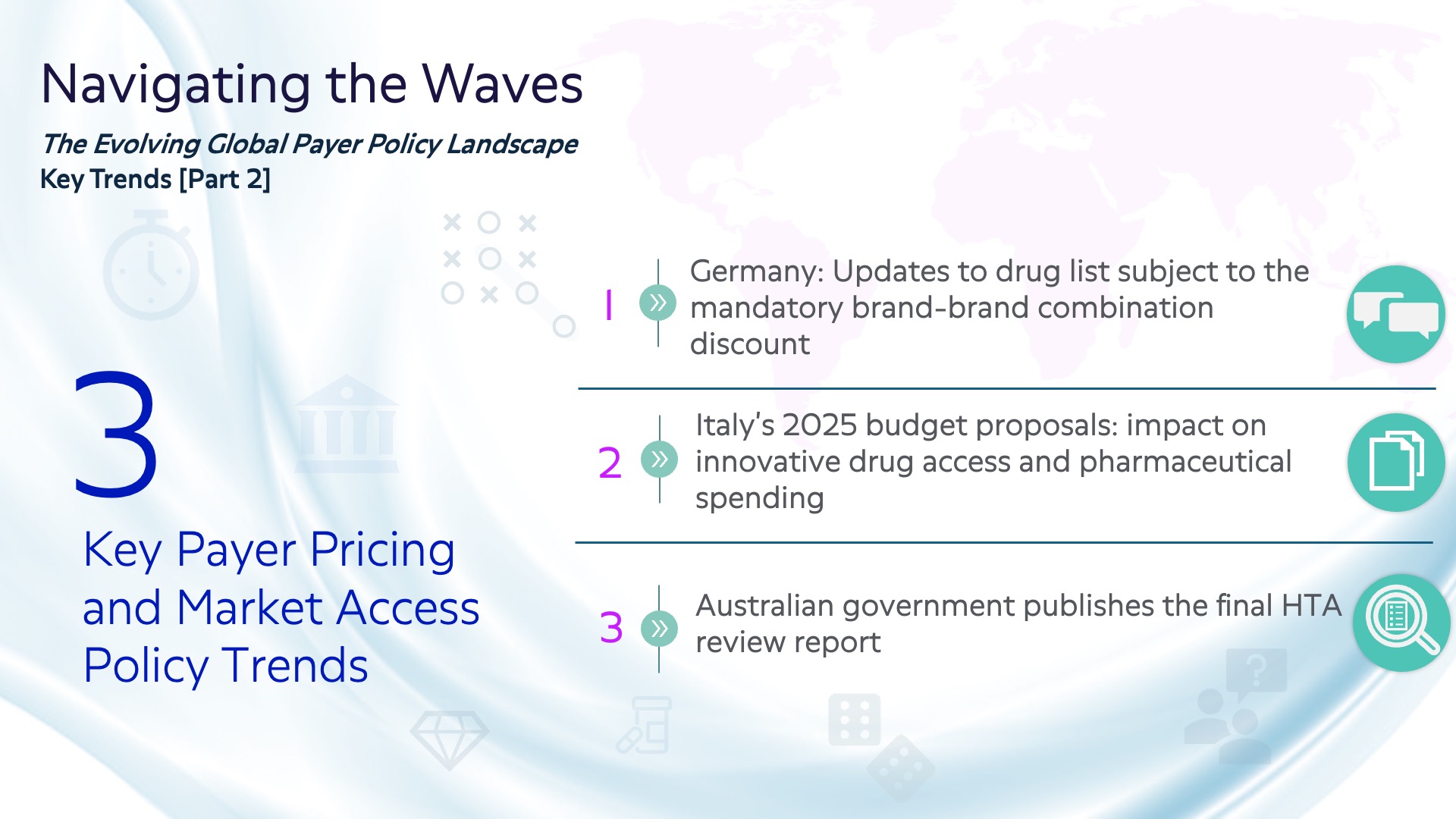
Access Infinity closely analysed three key payer policies from the perspective of P&MA implications for pharmaceutical manufacturers, focusing on how they can strategize to seize opportunities and address challenges.
Almost two years ago, the government introduced a 20% discount on drugs used in free combinations unless the combination has considerable or major added benefit rating. However, its implementation was difficult given the GKV-SV (National Association of Statutory Health Insurance Funds) and industry associations could not agree on how the rebate should be applied. Thus, the Federal Ministry of Health intervened, resulting in publishing new regulations recently.

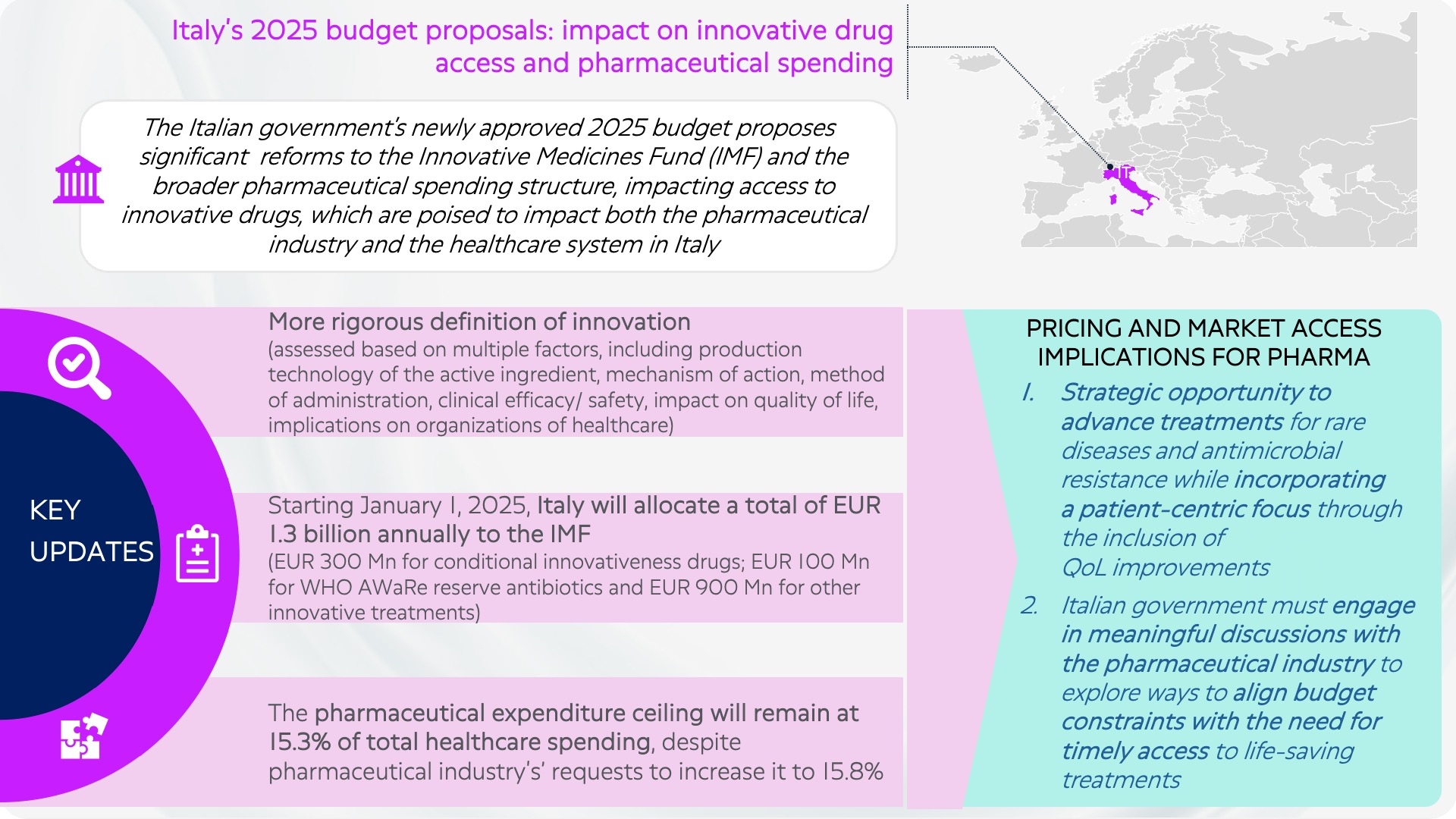
The Italian government’s newly approved 2025 budget proposes significant reforms to the Innovative Medicines Fund (IMF) and the broader pharmaceutical spending structure, impacting access to innovative drugs, especially those addressing critical conditions such as antimicrobial resistance (AMR). With the aim of improving access to novel therapies for serious diseases, these changes are poised to impact both the pharmaceutical industry and the healthcare system in Italy.
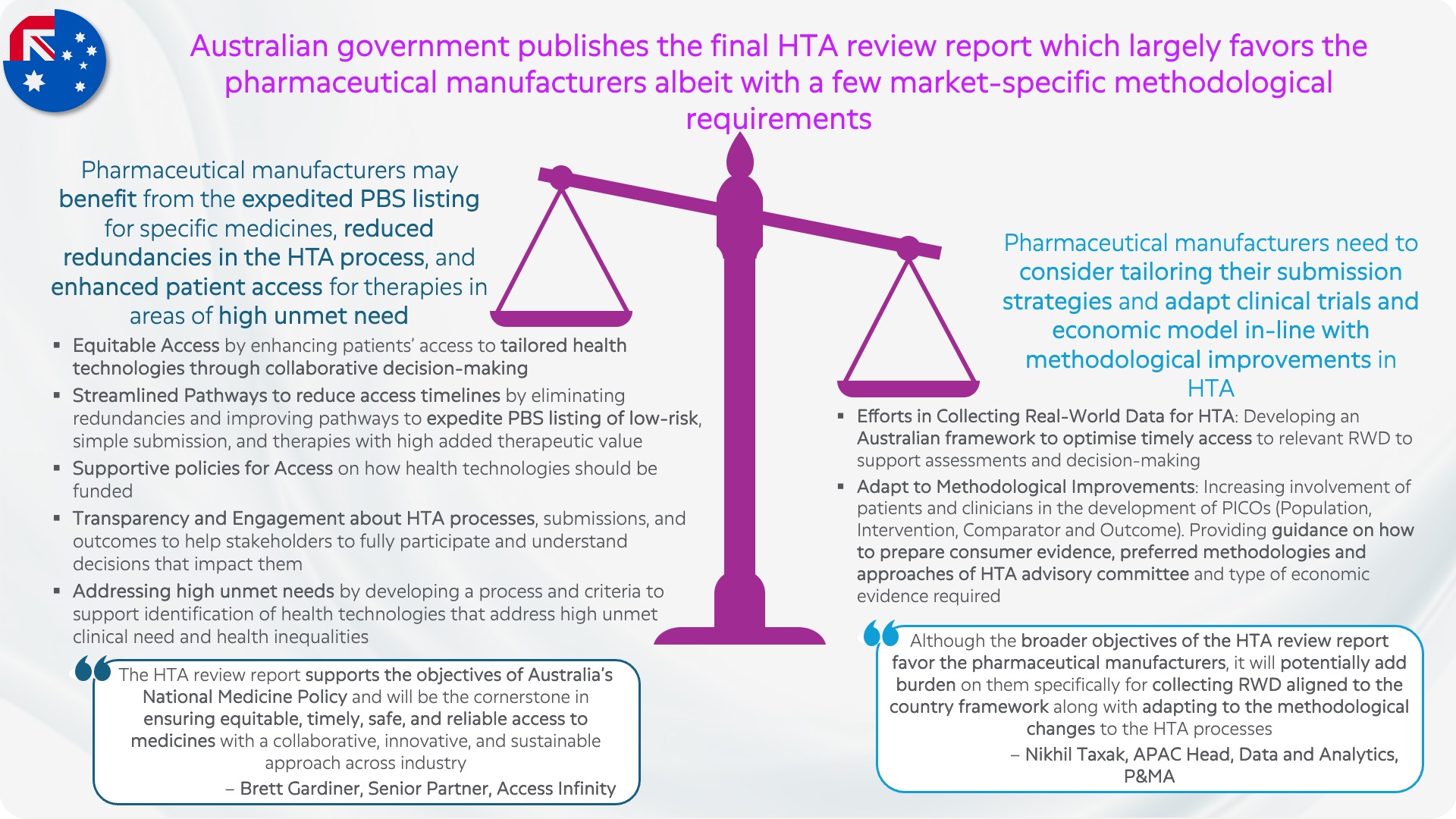
The federal government released the long-awaited final report of the HTA policy and methods review. The report outlined fifty recommendations with aim to improve access to new technologies, address disparity in access and simplify HTA process to boost participation from consumers and clinicians.
Pharma companies must prioritize proactive planning and adopt a forward-thinking strategy to navigate the complex and dynamic market access and pricing landscape evolving with payer policy environment. Agility and flexibility are crucial in responding to evolving payer landscapes, reimbursement policies, and competitive pressures.
Access Infinity advises global/ local market access and pricing teams within pharma organizations to initiate early planning. This proactive approach allows for a deeper understanding and identification of early market access and pricing opportunities. Access Infinity acts as a key enabler, guiding pharma companies through the complexities of the payer landscape. By fostering cross-functional synergies, Access Infinity helps navigate the challenges and ensure successful market entry and sustained access for innovative therapies.
Authored by
Nikhil Taxak, Ph. D, APAC Head, Pricing and Market Access Data and Analytics, Access Infinity
Mahesh Jaju, Associate Manager, Data, Access Infinity
Anupama Somu, Associate Manager, Data, Access Infinity
Srikanth Utukuri, Analyst, Data, Access Infinity
Samrudhi Mansukh, Analyst, Data, Access Infinity
Brett Gardiner, Senior Partner, Access Infinity

The global payer landscape is rapidly evolving, driven by increasing disease burden and rising healthcare costs worldwide. The payer demands are becoming more stringent in response to the growing complexity of new products which in a higher likelihood significantly influence pharmaceutical manufacturers’ decisions regarding clinical development, new product launches, portfolio management, pricing and market access strategy. As a result, it is imperative for manufacturers to understand the payer and market access (P&MA) policy dynamics to navigate this shifting terrain.
Globally, multiple payer policies have been introduced and implemented recently focused on patient access, cost-containment measures and adaptations in Health Technology Assessment (HTA) or regulatory frameworks.

Access Infinity closely analysed three key payer policies from the perspective of P&MA implications for pharmaceutical manufacturers, focusing on how they can strategise to seize opportunities and address challenges.
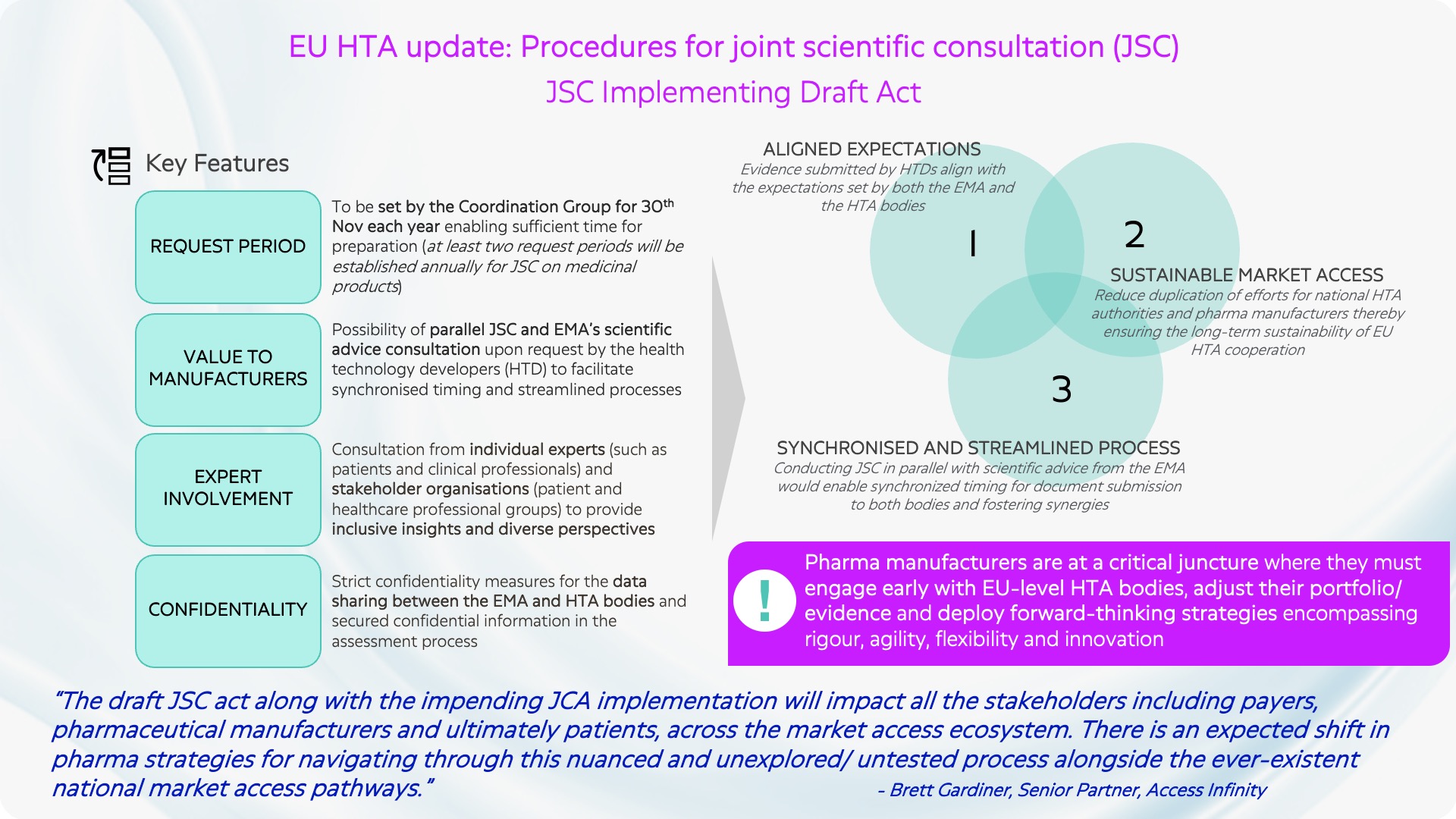
The EU’s new HTA rules (Regulation 2021/2282) mark a transformative step in how member countries evaluate new health technologies. They have been designed to foster cooperation across the EU and to optimise the use of health system resources while acknowledging national competencies. A key focus of this initiative is joint scientific consultations (JSC) for medicines wherein the European Commission has now released a draft regulation (set to apply from 12 January 2025) aiming to streamline the JSC process and provide a clear framework for health technology detailing the procedures for JSC on medicinal products for human use. For pharmaceutical companies, engaging with this process is not just an opportunity—it’s essential for navigating the complex landscape of HTA in Europe.
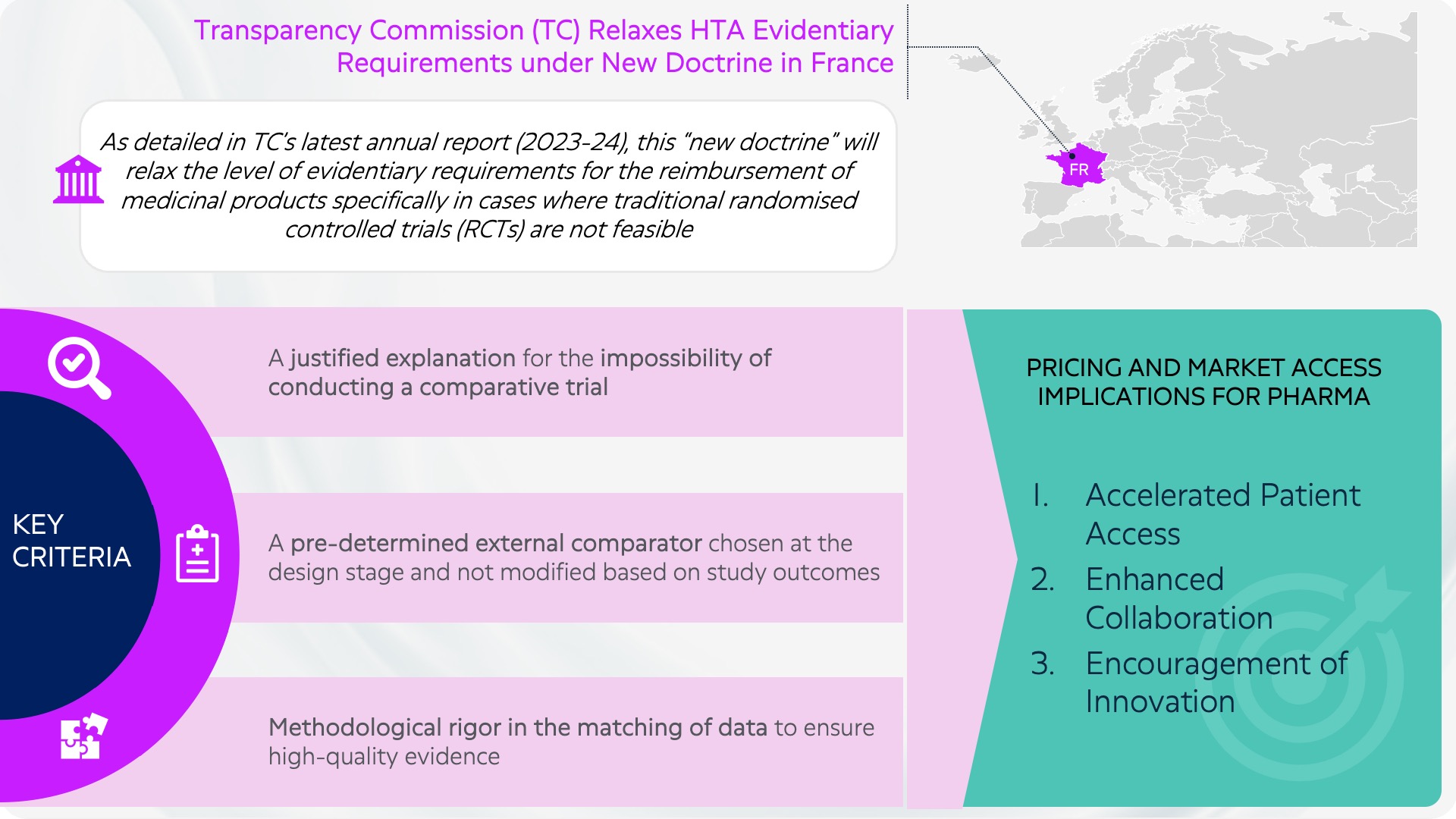
In a significant shift aimed at accelerating patient access to new therapies, France’s Transparency Commission (TC) has introduced a new policy framework, as detailed in its latest annual report (2023-24). This “new doctrine” will allow a reduction in the level of evidence required for the reimbursement of health products in cases where traditional randomised controlled trials (RCTs) are not feasible. Previously, RCTs were upheld as the gold standard for safety and efficacy, but the TC will now accept indirect comparisons under specific conditions.
The Medical Research Act was passed by the German parliament on 4th July 2024. This act is a pivotal step in Germany’s National Pharma Strategy and has introduced several key changes to country’s dur pricing and reimbursement that are dependent on manufacturers carrying out R&D activities in Germany.
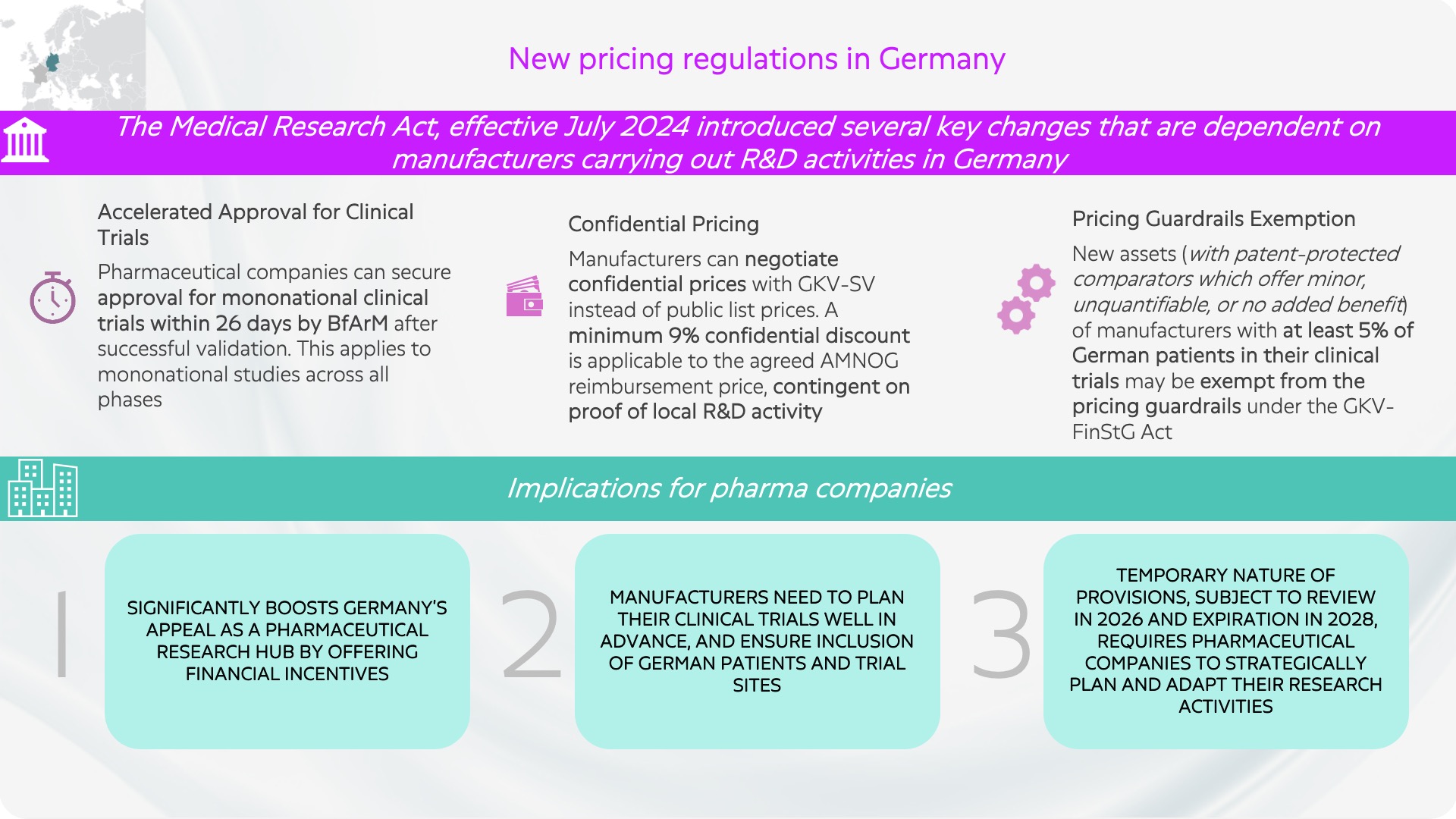
It is imperative to monitor any further developments since the bill is pending for approval by the German Federal Council (Bundesrat). Once approved, different provisions will come into force at different times however, confidential reimbursement price and the new connection between drug pricing and local clinical trials will apply as from 1 January 2025.
Access Infinity advice global/ local market access and pricing teams within pharma organisations is to initiate planning in advance by adapting and adopting a forward-thinking strategy coupled with agility and flexibility. It is imperative for the pharma manufacturers to understand and unlock the opportunities while Access Infinity can act as the enabler to guide through the unchartered and dynamically evolving payer landscape, fostering cross-functional synergies to successfully navigate the wave of challenges.
Authored by
Nikhil Taxak, Ph. D, APAC Head, Pricing and Market Access Data and Analytics, Access Infinity.
Mahesh Jaju, Associate Manager, Data, Access Infinity
Anupama Somu, Associate Manager, Data, Access Infinity.
Srikanth Utukuri, Analyst, Data, Access Infinity.
Brett Gardiner, Senior Partner, Access Infinity.


Copyright All Rights Reserved
Access Infinity 2025
Get in touch
contact@accessinfinity.com
Uncommon Holborn
81-87 High Holborn,
London
WC1V 6DF
Products
We use technologies like cookies to store and/or access device information. We do this to improve browsing experience and to show (non-) personalised ads. Consenting to these technologies will allow us to process data such as browsing behaviour or unique IDs on this site. Not consenting or withdrawing consent, may adversely affect certain features and functions.